Problems
You read reviews one by one and nothing comes of it
An owner who reviews new arrivals once a month is doing exactly what they should — and still will not see what matters most.
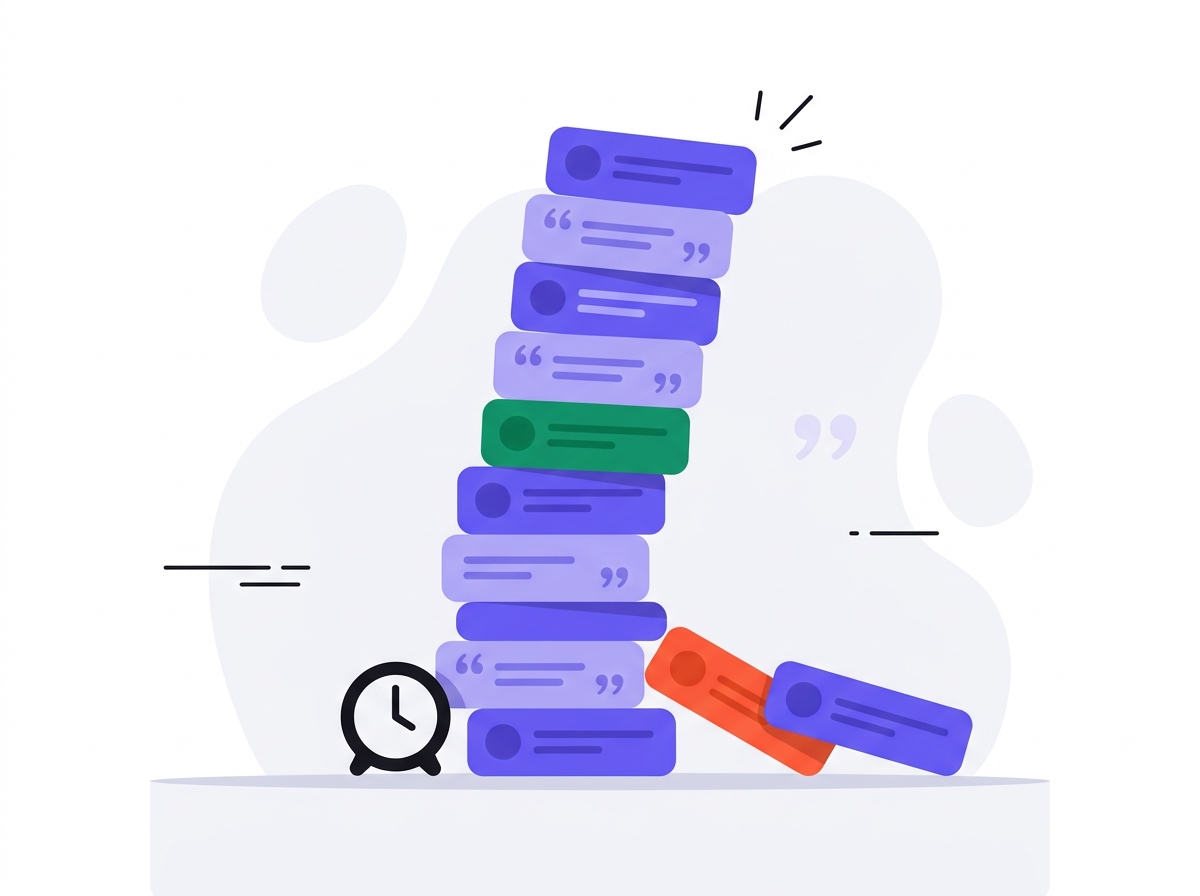
Why reading in order fails
Reviews arrive one at a time, days apart. A complaint about waiting at reception happens on a Monday, another two weeks later, a third the following month. Each of them, read alone, is a single incident — and is treated as one. Only a year laid out at once shows that it recurs forty-one times and always on Fridays.
Recency effect
The last review read weighs more in memory than the forty before it. A decision taken after reading an extremely bad review is a decision about one person, not about a phenomenon.
Quiet complaints do not shout
A problem described calmly by forty people loses to one described furiously by one. When counted, it is the other way round — and that is the right order.
No time axis
Reading in order hides that a complaint built up over three months. It becomes visible only once it is frequent enough to catch the eye.
Step by step
What changes when you count instead of read
-
1
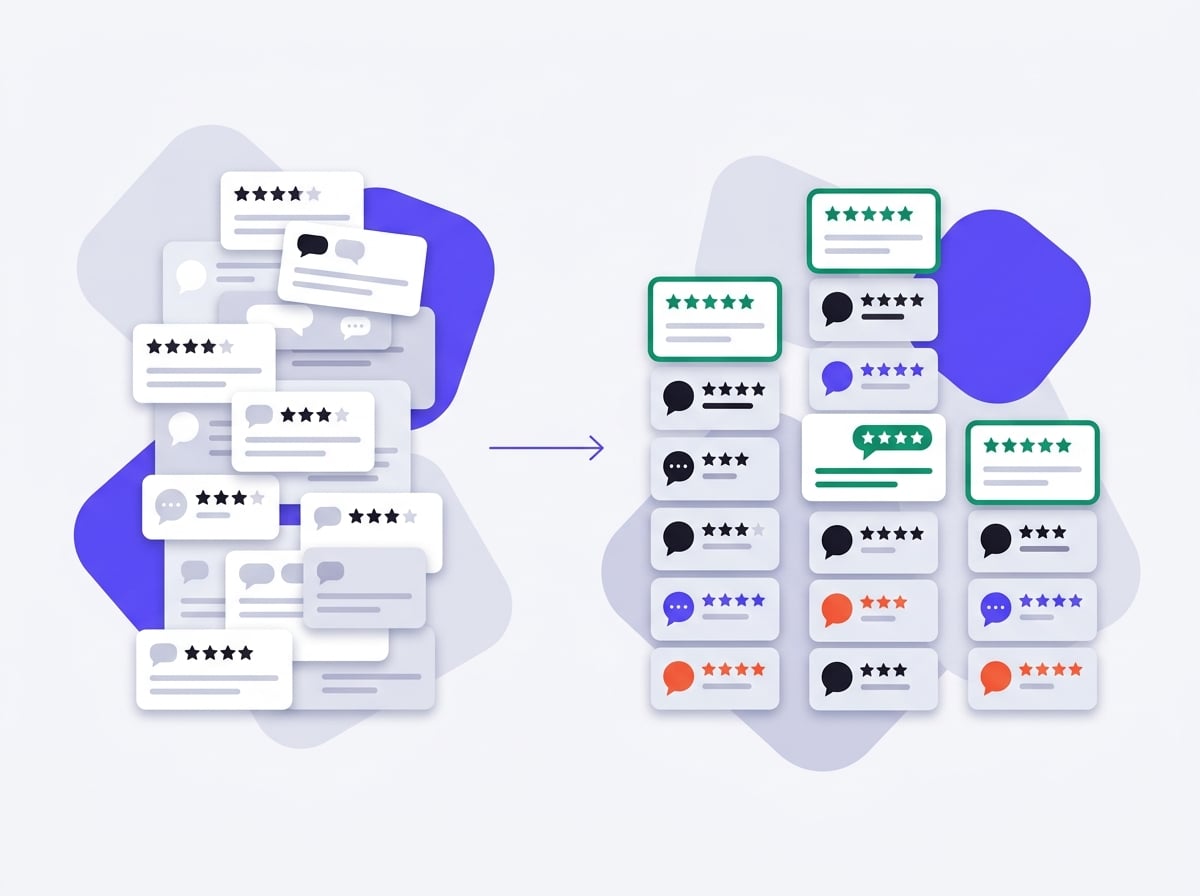
All statements at once
Not a stream where each review is a separate event, but a set in which repetition is visible. Three complaints spread across a quarter look different when they stand side by side.
-
2
The same category every time
The model assigns a category regardless of the day or the mood. With manual note-taking the same review lands once under "service" and once under "waiting", depending on who read it.
-
3
Order from counts, not from tone
The top of the list holds what affects the largest number of people — including when it was described calmly. A single furious review stops shifting priorities.
-
4
A time axis
You can see since when a complaint has been running and whether it is growing. That is information reading in order cannot show at all.
In practice
How long one pass actually takes
Two thousand reviews at a minute each is thirty-three hours of pure reading — before any note-taking, tallying or sorting. In practice that means several working days per pass, repeated quarterly to keep the result current.
33 h
of reading alone at two thousand reviews. The analysis does that part in minutes and leaves you the decision about what to do with it.
Why it works this way
What changes when you count instead of read
The machine is not smarter than the reader and does not understand context better. It is immune to two things a person is not immune to: reading order and tone. That is why the result starts with a complaint count rather than with whichever review was the angriest.
Common questions
Is reading more carefully not enough?
No, and it is not a question of diligence. At two hundred reviews careful reading works. At two thousand it requires note-taking and tallying — that is, doing by hand the thing we are describing.
How long does reading two thousand reviews take?
At a minute each that is about thirty-three hours of pure reading, before any note-taking or tallying. In practice it means several working days per pass.
Does analysis replace reading reviews?
It replaces counting and sorting — the part that is simply not doable at two thousand reviews. You keep reading specific reviews: every problem card carries quotes with a link to the original, ready to check.
See also
Be first in when we launch
Join the waitlist. We'll write once, on launch day, with a link to create your account.