Features
Review analysis that ends in a task list
Not "sentiment analysis" and not a word cloud. The model reads every review with text, groups what repeats, and a separate layer checks each quote against the original.

From corpus to task list
Analysis starts by pulling the ENTIRE review history, not the last ten — without a time axis you cannot tell a problem that persists from one that ended after a refurbishment. Then classification: every review with text gets categories and a sentiment. Problem cards are built on that, and the order of fixes comes from complaint counts rather than from impressions.
Statistics from everything, conclusions from text
About half of reviews are a star rating with no words. They count towards the average and the listing, but not towards conclusions — there is nothing in them to extract. The report says so and gives both numbers.
Trend on share, not on count
Complaint counts rise with traffic, so a trend on raw counts shows decline where there is none. We compute the share of complaints among reviews from a period, which removes most false alarms.
The credibility threshold, stated plainly
Below twenty reviews with text a single statement carries too much weight. The report is still produced, but flagged as indicative — rather than faking a certainty that is not there.
Step by step
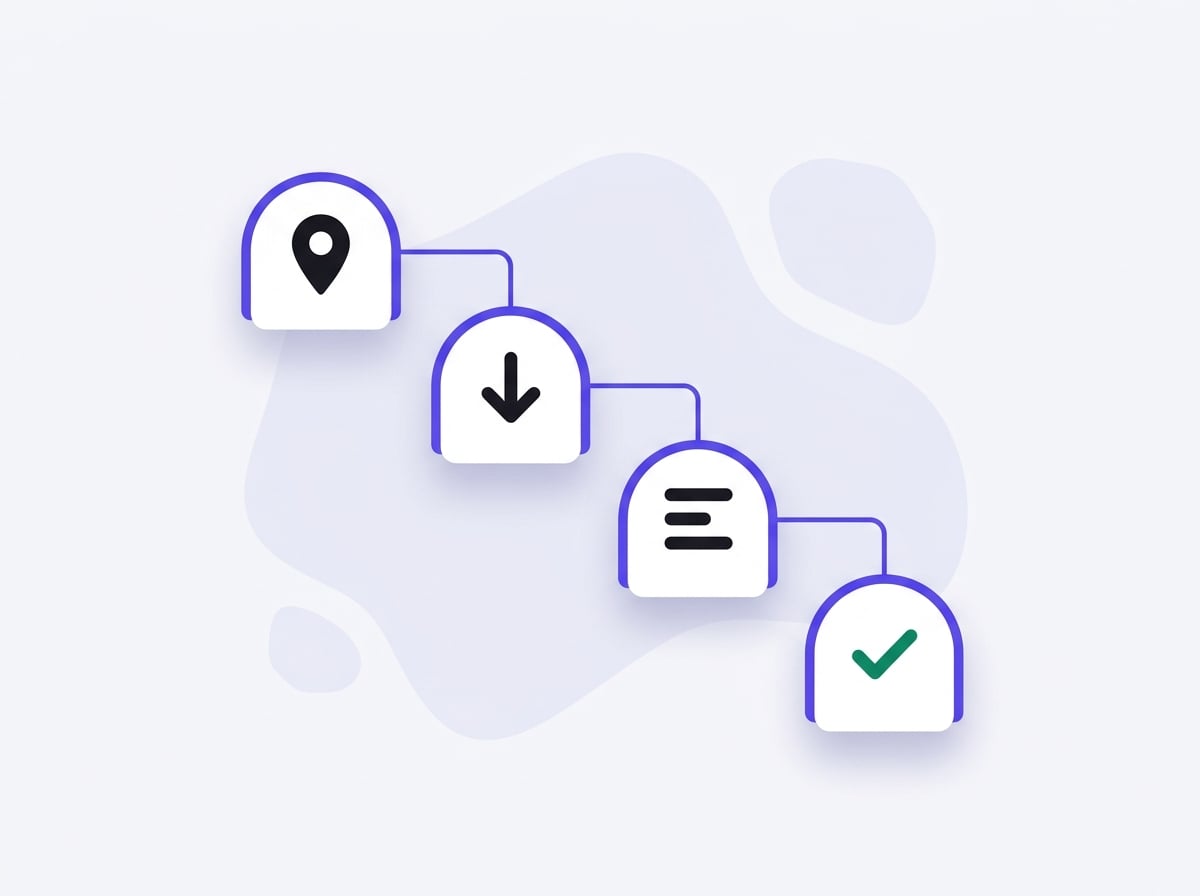
Four steps from connecting a venue to a task list
-
1
You point at the venue
Paste the Google Maps profile link or the Place ID. With a Google Places key connected you can find it by name alone. You attach as many platforms to one location as you want analysed together.
-
2
We pull the full history
Not the last ten reviews — all of them, from the first. At four thousand reviews this step takes minutes and happens without you; an email arrives when it is done. Later runs pick up only new statements, so you pay for the increment rather than twice for the same thing.
-
3
Classification and grouping
Every review with text receives categories and a sentiment — separately for each topic it raises. "Nice room, but we waited forty minutes" lands in praise for the room and in complaints about waiting, because that is how it was written.
-
4
Verification and report
A separate layer checks every quote character by character against the original. Only then is the report assembled: a fix list ordered by complaint count, problem cards with quotes, and a PDF to send on.
In practice
What it looks like on a venue with four thousand reviews
A hotel with history back to 2012, 4,118 reviews across Google Maps and Booking.com, of which 2,340 carry text. The analysis isolated nineteen repeating topics, eleven of which cleared the credibility threshold. Top of the list was a complaint management did not know about, because in any single month it looked like an incident.
2,340
reviews with text entered the analysis — out of 4,118 in total. The rest are bare star ratings, which we count in the statistics but not in the conclusions.
Why it works this way
Why reading the reviews yourself is not enough
At two hundred reviews a person manages. At two thousand they start remembering the last ten and calling it a trend — and that is a measurement error, not laziness. The machine is not smarter than the reader here; it is merely immune to reading order and to which review was the angriest.
Common questions
How many reviews does an analysis need?
Around twenty reviews with text on the topic you want to draw a conclusion about. Below that, a repeating problem cannot be told from a one-off incident, so the report is flagged as indicative.
Does the analysis include reviews from years ago?
Yes, and that is the whole point of pulling the full history. A complaint recurring from 2021 to today means something different from one that stopped in the month of a refurbishment — and the second is the only available evidence that the money did anything.
Can the model invent a problem that is not there?
A problem card needs at least three independent source reviews, and every quote is checked character by character against the original. A fragment that is not in the original goes, and so does the card that rested on it.
See also
Be first in when we launch
Join the waitlist. We'll write once, on launch day, with a link to create your account.