Features
What Mutterbox actually does
Twelve features, each with its own page — because someone asking about one thing should get a page about that one thing, not a paragraph inside another.


Review analysis
We pull the entire review history, group what repeats and hand back a list of fixes carrying a deadline, a cost and a complaint count.
Read →
Problem cards
Every repeating problem gets a card: complaint count, share of reviews, confidence level and quotes lifted from the originals.
Read →
Strengths
The second half of the report answers the question nobody asks until it is too late: what works here and what must not be touched.
Read →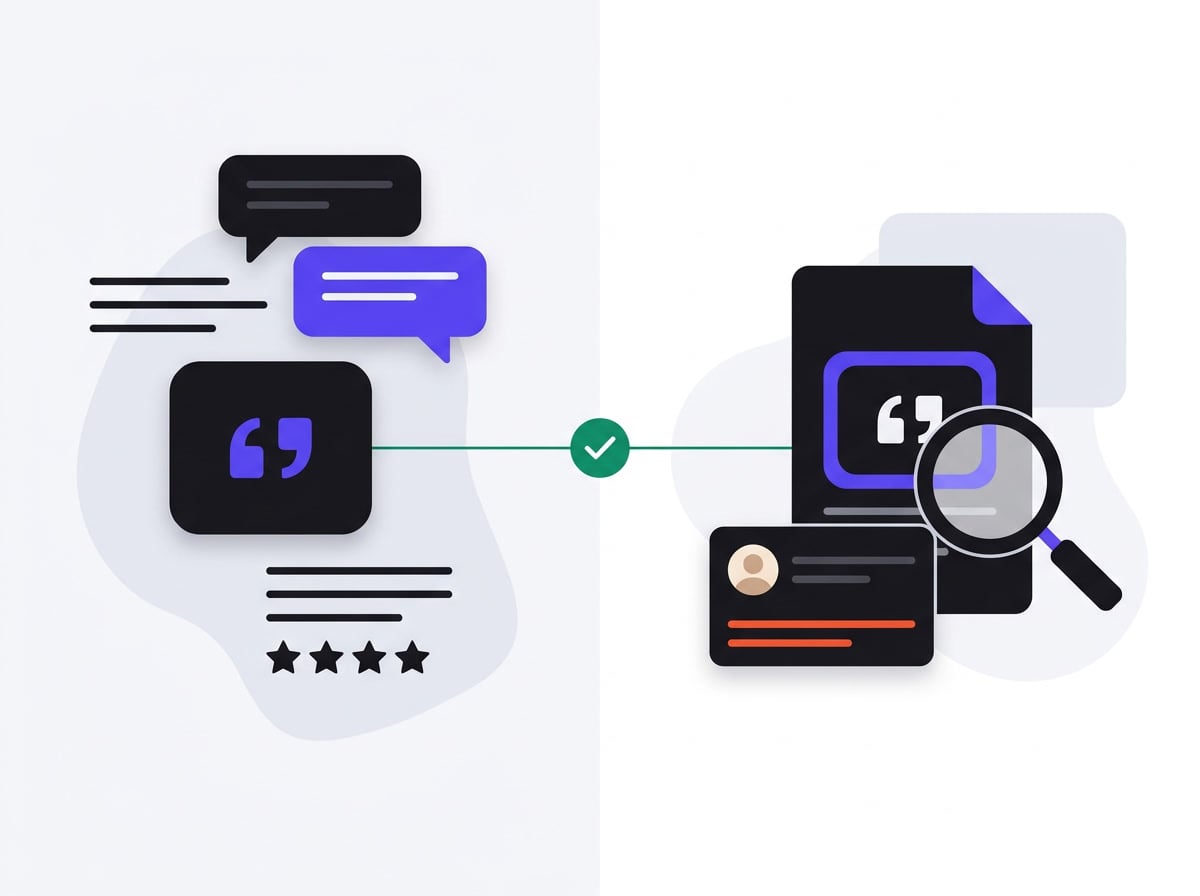
Quote verification
A separate layer compares each quote against the original review. A fragment that is not in the original goes, and so does the card that rested on it.
Read →
Monitoring
A weekly or monthly check of what changed — a difference report rather than a full one from scratch.
Read →
Competitor analysis
Comparison on categories and shares, not on the star average. No recommendations — the commentary comes from the metrics alone.
Read →
PDF report
A PDF with the full task list, a CSV with source data, and a share link that needs no account.
Read →
Review widget
One script shows the rating and review count from your connected platforms. No review text, no cookies, no tracking.
Read →
Collecting reviews
Email invitations and a form that does not ask for the rating first. Compliant with Google policy and with consumer review rules.
Read →
Finding reviews
A list of places businesses usually do not know about: trade directories, local portals, alternative maps — each with a working link.
Read →
Custom categories
Up to ten custom categories with a one-sentence description for the model. A furniture maker sees "installation"; a clinic sees "phone bookings".
Read →
API and webhooks
An API token for pulling locations, analyses and reports, plus webhooks pushing events to your address. Read-only by design — a token cannot generate a cost.
Read →Review sources
Four platforms, four different kinds of data
These are not the same reviews or the same audience. A business reading one source has a systematically distorted picture — which is why every platform has its own page here.

Google reviews
The full review history from a Google Maps profile, from the first one. Statistics from all of them, conclusions only from those with text.
Booking.com reviews
Reviews only from people who actually stayed, split into categories set by the platform. The most factual source in hospitality.

TripAdvisor reviews
The longest reviews of any platform, written later and with distance. Excellent for spotting repeating patterns, weak for current monitoring.

Facebook reviews
Recommendations rather than star ratings, often from people nearby. Short, emotional and the most vulnerable to coordinated pushes.
Be first in when we launch
Join the waitlist. We'll write once, on launch day, with a link to create your account.