Features
Every quote checked character by character
A language model can write a quote that sounds real and does not exist. In a report about other people's reviews, that is the one kind of error you cannot let through.
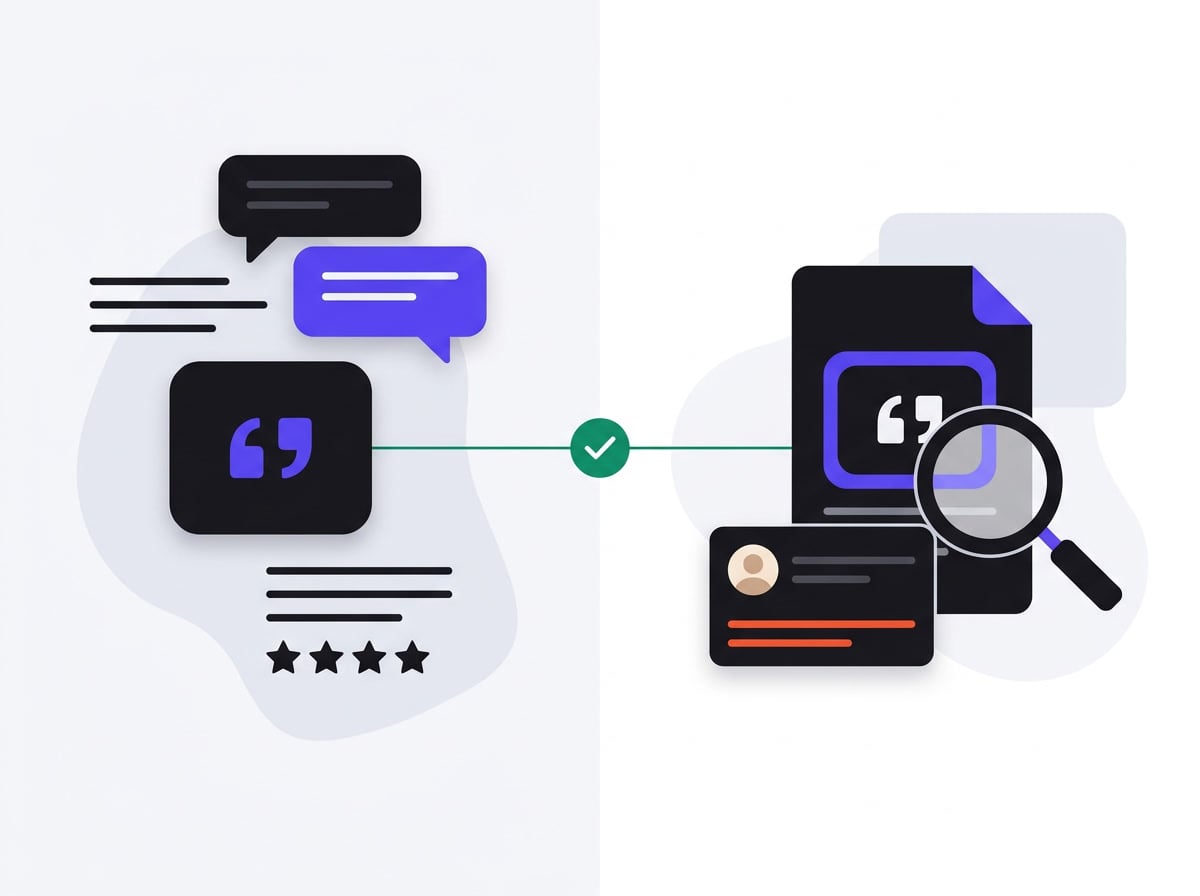
How verification works
Once the cards exist, a second layer takes every quote and looks for it in the original review — literally, character by character, typos included. A quote that cannot be matched is rejected. A card left without a single verified quote does not reach the report.
Quotes keep the author's typos
We do not correct other people's words. A corrected quote stops being a quote, and in a dispute with the review's author that difference matters.
Date, platform and review number
Every quote carries a trail back to the original. Without it a report is an assertion, not evidence.
Rejection, not repair
A quote that fails verification is not repaired or swapped for a similar one. It goes — together with its card, if it was the only thing holding it up.
Step by step
What happens to every quote before it reaches the report
-
1
Selecting a fragment
The model picks the fragment that best carries the signal described on the card. At this stage it is still a proposal, not a quote.
-
2
Matching against the original
The fragment is searched for in the original review literally — character by character, typos and spacing included. It is a text-to-text comparison, not a similarity judgement.
-
3
The decision
A matched fragment goes into the report with its date, platform and review number. An unmatched one is rejected with no attempt at repair or substitution.
-
4
Checking the card
A card left without a single verified quote does not reach the report. We would rather ship a shorter report than one with an uncheckable sentence in it.
In practice
How to check the report without taking our word for it
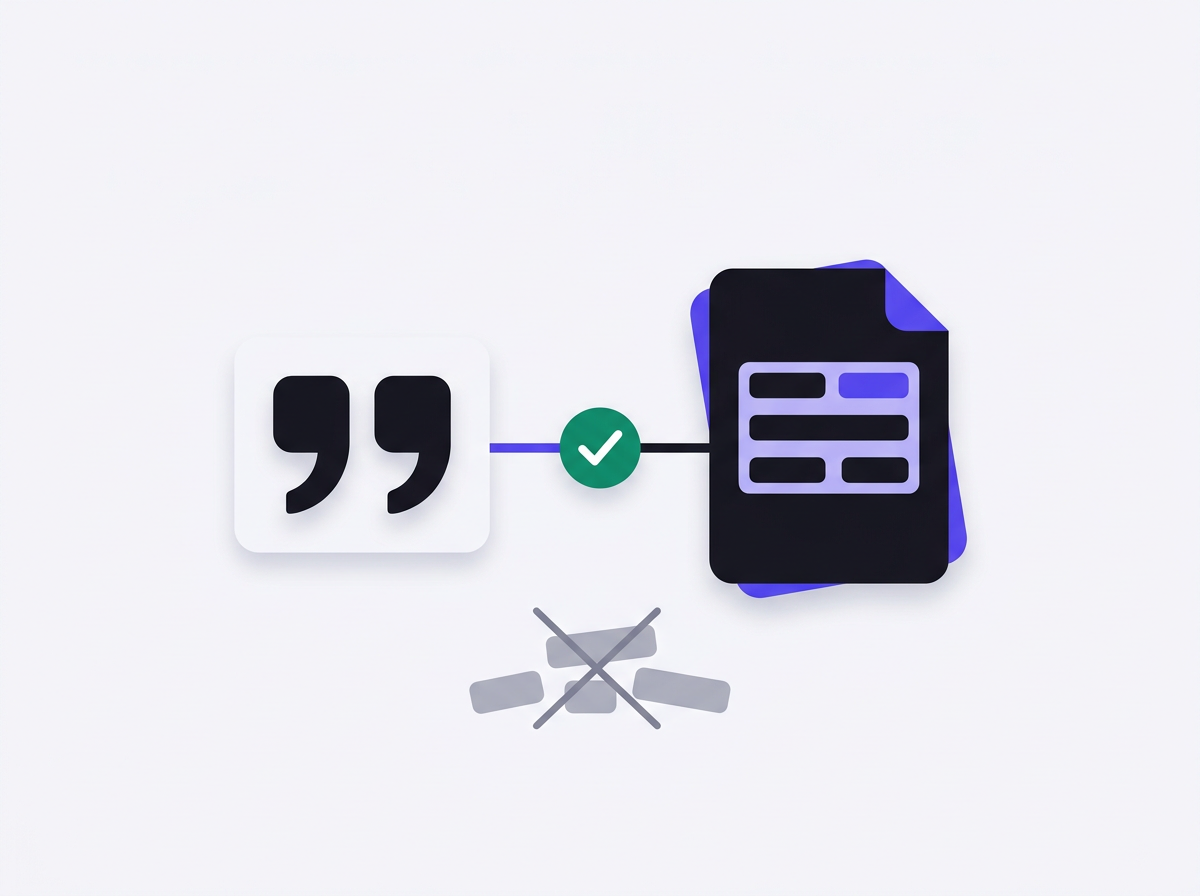
Every quote in the report carries a platform, a date and a review number, and the CSV export holds the full source texts. Open the Google Maps profile, find the review from the given date, compare. Fewer customers do this than should — but the fact that it can be done changes what kind of document this is.
100%
of quotes in the report can be found in the original review. That is not a quality claim but the condition a quote has to meet to appear there at all.
Why it works this way
Verification as its own layer
Checking a quote is a text-against-text comparison — an operation with an unambiguous answer that does not depend on how the model read the instruction that day. That is why it is a separate pass over the data rather than a sentence in a prompt. It costs a few extra seconds and produces a report in which every quote can be clicked and checked against the original.
Common questions
What happens when a quote fails verification?
It is removed with no attempt at repair. If it was the only basis for a problem card, the card does not reach the report either — we would rather ship a shorter report than one with an uncheckable sentence in it.
Does verification cover summaries too?
Summaries are paraphrase and cannot be verified by text matching. That is why the report separates them visually: a quote sits in quotation marks with a link to its source; a paraphrase does not.
Can I check it myself?
Yes. Every quote in the report carries its platform, date and review number, and the CSV export contains the full source texts. You do not have to take our word for it, and we think you should not.
See also
Be first in when we launch
Join the waitlist. We'll write once, on launch day, with a link to create your account.