Features
A report to send to the board, not to click through
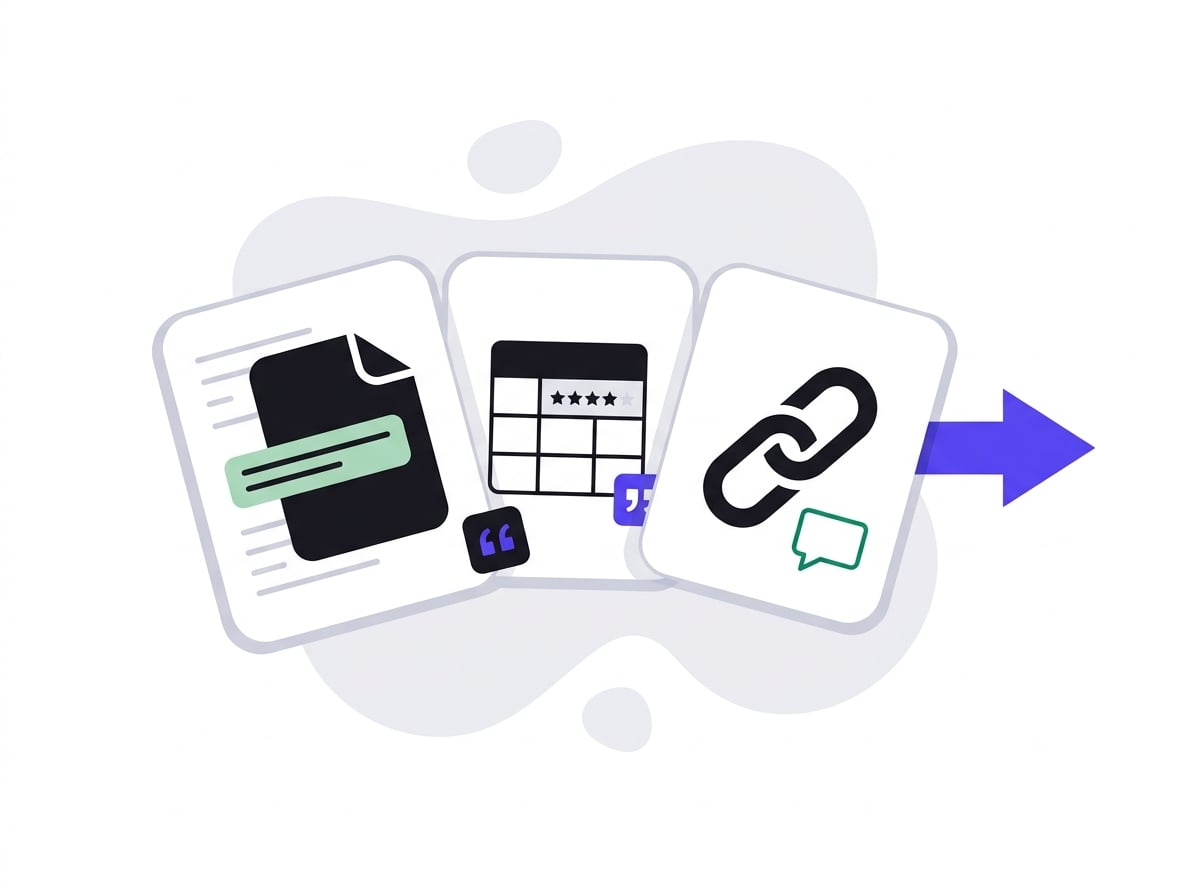
The report has three shapes because it reaches three different people: the owner reads the PDF, the analyst opens the spreadsheet, the board gets a link.

Three shapes of the same report
The PDF is a document to print and put on the table at a meeting — with a cover, a fix list ordered by deadline and problem cards carrying quotes. The CSV holds the source data: every review with its category, sentiment and date, for your own analysis. The share link opens the report in a browser with no login and no account.
The PDF is produced on our side
Without sending other people's reviews to an external conversion service. That is personal data belonging to the review authors and it has no reason to leave our infrastructure.
A link search engines will not index
The address of a shared report is excluded in robots.txt and carries a header forbidding indexing. It is confidential despite having no login.
Your own logo on the Agency plan
A report sent to an agency's client looks like the agency's document, not ours. That difference is visible on page one.
Step by step
Three shapes of the report and what to do with each
-
1
The PDF for the meeting
A cover, a fix list ordered by deadline, problem cards with quotes and the methodology at the end. A document to print and put on the table — readable by someone who will see it once.
-
2
The CSV for the spreadsheet
Every review in the corpus with date, platform, rating, categories, sentiment and full text. Enough to build your own analysis or to load into a warehouse.
-
3
The share link
An address that opens the report in a browser with no login and no account. Excluded from indexing — confidential despite having no password.
-
4
Your own logo
On the Agency plan the report carries your mark, on the cover and in the footer of every page.
In practice
A document that needs no translation
The report runs to twenty-odd pages, but the first is enough to decide on: five tasks in order, each with the number of complaints it removes, an order-of-magnitude cost and a time horizon. The rest exists so it can be checked — and so that anyone asking "how do you know" gets an answer on page eight.
1 page
is enough to decide on. The rest is the evidence — quotes, dates and review numbers that can be found in the original.
Why it works this way
Why a PDF and not just the panel
The panel is for someone who works with the data daily. The report goes to someone who will see it once, in a meeting, and has to understand it without training. Those are different requirements, and folding them into one produces a panel that is too hard and a report that is too shallow.
Common questions
Can the report be sent to someone outside my organisation?
Yes, with a share link. It opens in a new tab with no account and no login — the same link you would use to share the report with your team.
What is in the CSV export?
Every review in the corpus with its date, platform, rating, assigned categories and sentiment, plus the full source text. Enough to build your own analysis in a spreadsheet.
Does the report contain personal data of review authors?
It contains the review text and the display name the platform shows — exactly what is publicly visible on the profile. We add nothing that any visitor cannot see.
See also
Be first in when we launch
Join the waitlist. We'll write once, on launch day, with a link to create your account.